
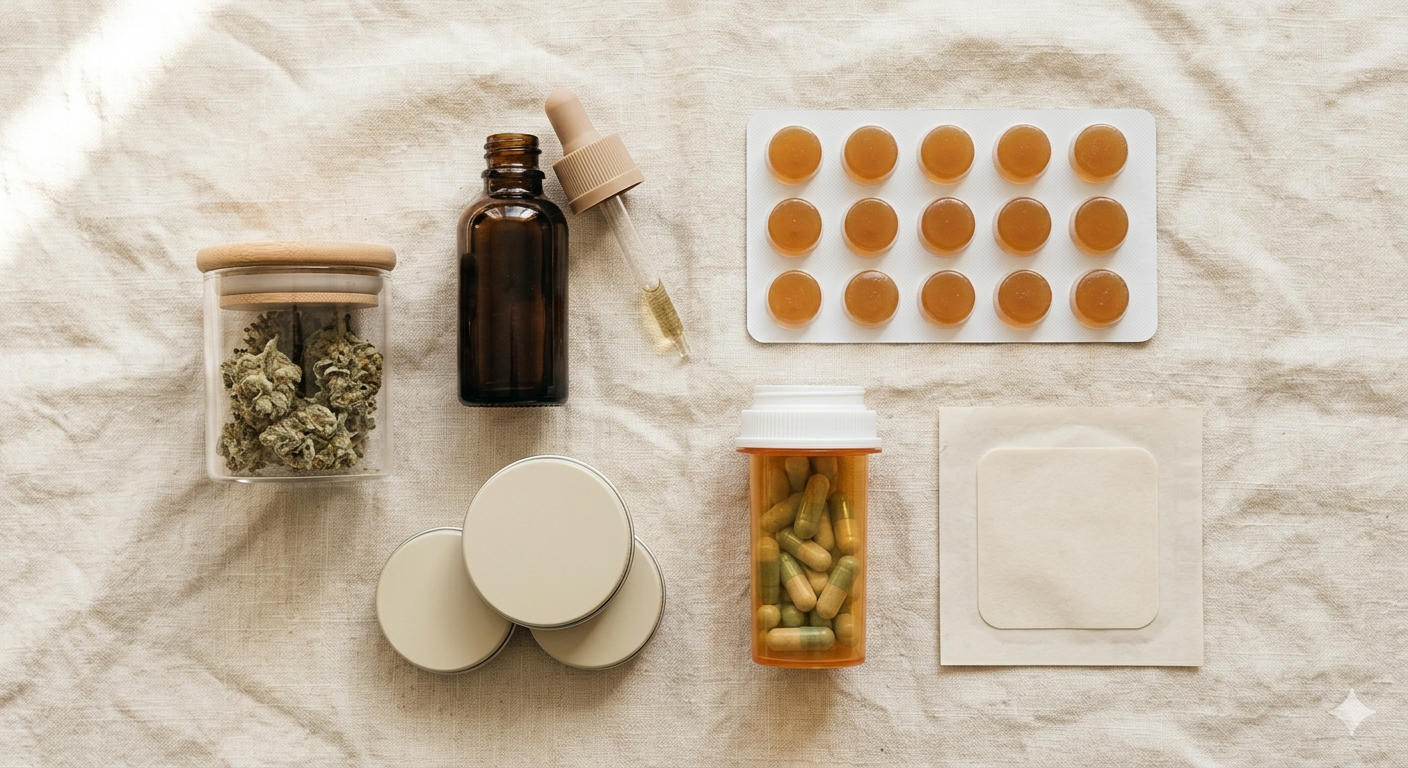
When most people picture medical marijuana, they picture a single product, usually flower in a jar. The reality is far more varied. The types of medical marijuanas available today fall into seven distinct product categories, each with its own onset time, duration, and ideal use case. Understanding these types of medical marijuanas is the difference between a treatment that works and one that frustrates you for weeks. This guide walks through every major category and what conditions each suits best.
Quick Answer: The main types of medical marijuanas are flower, edibles, tinctures, topicals, concentrates, capsules, and transdermal patches. Each delivers cannabinoids differently, with onset times ranging from minutes to hours. The right choice depends on your condition, schedule, and tolerance.
Why Product Type Matters as Much as Strain
Patients new to medical cannabis often focus only on strain names, but how a product enters your body matters just as much. Smoking flower hits within minutes and fades inside three hours. An edible takes 30 to 90 minutes to start but lasts six to eight. A topical never reaches your bloodstream and only affects the spot where it is applied. WebMD has a clear breakdown of how cannabis delivery methods compare, and reading it before your first appointment makes the provider conversation more productive.
Choosing among the types of medical marijuanas comes down to matching the product’s behaviour to your condition’s. A patient with breakthrough nausea needs something fast. A patient with chronic nerve pain needs something steady. A patient with localised joint pain needs something that does not affect the rest of the body. This is why most programmes train pharmacists or budtenders to ask about your symptoms, daily routine, and previous experience before recommending anything. The product category is the first decision. The strain comes after.
7 Main Types of Medical Marijuanas Available Today
Each category below solves a distinct patient problem. Knowing what each one does well is the foundation of a productive treatment plan.
Type 1: Flower for Fast and Flexible Relief
Dried cannabis flower is the original format and still the most popular among the types of medical marijuanas. Patients vaporise or smoke it to deliver cannabinoids through the lungs, where effects begin within minutes and peak around 30 minutes. Flower works well for breakthrough pain, sudden nausea, panic attacks, and situations where waiting an hour is not realistic. The trade off is shorter duration, usually two to three hours.
Type 2: Edibles for Long Lasting Steady Effects
Edibles include gummies, chocolates, mints, baked goods, and drinks. The cannabinoids pass through the digestive system and liver, which converts THC into a more potent and longer lasting form. Onset takes 30 to 90 minutes, and effects can last six to eight hours. Among the types of medical marijuanas, edibles are the workhorse for chronic pain, insomnia, and persistent anxiety because the steady release smooths out the peaks and valleys of other formats.
Type 3: Tinctures for Precise Dosing
Tinctures are alcohol or oil based liquids dropped under the tongue. They sit between flower and edibles in onset, activating within 15 to 45 minutes. The big advantage is dose precision. Most tinctures come with a marked dropper, letting patients adjust intake by single milligrams. Leafly maintains a guide to tincture dosing that helps new patients build a baseline. Tinctures suit general anxiety, mild chronic pain, and patients who do not want to inhale anything.
Type 4: Topicals for Targeted Local Relief
Creams, balms, salves, and roll on oils deliver cannabinoids directly to the skin and tissue beneath. Crucially, they do not reach the bloodstream in meaningful amounts, so they will not cause a high or trigger a positive drug test in most cases. Topicals are first choice for arthritis flares, muscle soreness, and skin conditions. Relief is genuine but stays in the area where you apply it.
Type 5: Concentrates for Severe Symptom Days
Concentrates include waxes, shatter, rosin, live resin, and distillates. These extracts are often three to four times stronger than flower. Among the types of medical marijuanas, concentrates serve patients with severe pain, severe nausea, or appetite loss from chemotherapy who need maximum effect from a small dose. They are not a starting point. Most programmes recommend them only after a patient has built tolerance with milder formats.
Type 6: Capsules for Discreet Daily Use
Capsules look and act like any other supplement, which is part of their appeal. A patient who needs cannabis support during the workday can take one without explaining anything. Onset is similar to edibles at 45 to 90 minutes, and duration runs six to eight hours. Among the types of medical marijuanas, capsules are common for daily anxiety, sleep support, and mild chronic conditions where consistency matters more than speed.
Type 7: Transdermal Patches for Steady Background Dosing
Patches deliver a controlled dose of cannabinoids through the skin and into the bloodstream over 8 to 12 hours. They are the closest medical cannabis comes to a pharmaceutical delivery system. Patches suit conditions that require constant cannabinoid levels, like severe chronic pain, certain seizure disorders, and ongoing inflammatory conditions. Healthline’s review of transdermal cannabis explains why this format produces a flatter, steadier response than oral options.
How Patients Actually Choose Between Types of Medical Marijuanas
In practice, most patients use two or three of these types of medical marijuanas rather than just one. A common pattern is a daily capsule or edible for baseline relief, a tincture or vape for breakthrough symptoms, and a topical for localised flare ups. The combination covers different needs without overdosing any single route.
Working with a knowledgeable provider speeds this up. Many medical programmes offer free pharmacist consultations, and bringing a written symptom diary shortens the trial and error phase. Track when symptoms hit, how long they last, what you tried, and what worked. After two weeks, patterns appear that point at the right format.
Cost is also real. Flower remains cheapest per milligram of THC, followed by tinctures and concentrates. Edibles, capsules, and patches carry a premium for convenience. Many programmes offer veteran, low income, or chronic illness discounts that change the calculation, so it is worth asking at every visit.
For more cannabis education and condition specific guides, visit our full library at Simply Greenny Blog, and explore the rest of the site at simplygreenny.com.
Frequently Asked Questions About Types of Medical Marijuanas
Which of the types of medical marijuanas is best for chronic pain?
There is no single best option. Many chronic pain patients combine a long acting format like an edible or capsule with a fast acting format like a vape or tincture for breakthrough pain. Topicals can supplement both for joint hot spots. The combination usually outperforms any single format.
Are some types of medical marijuanas safer than others?
All cannabis from a licensed medical programme passes the same testing for pesticides, heavy metals, and contaminants. The safety differences are about delivery. Smoking carries more respiratory risk than vaping, which carries more than edibles. Topicals are lowest risk overall because they do not affect the rest of the body.
Will any of these types make me feel impaired?
Topicals usually do not cause impairment. Everything else can, depending on dose and THC content. Many patients use CBD dominant or 1 to 1 ratio products to get relief without significant impairment. Start with the lowest available dose and increase only after two weeks.
How long does each type of medical marijuanas take to work?
Flower and vapes work within five minutes. Tinctures take 15 to 45 minutes. Edibles, capsules, and oral concentrates take 30 to 90 minutes. Topicals work locally within 15 to 30 minutes. Patches take hours to reach steady levels but keep working for the full wear time.
Explore premium cannabis insights and products at Simply Greenny.
post comments
some related articles
Stay Groovy